Listen to the wind eight hundred times 聽風八百遍
2025 / 15:44 / Color / Sound / 2.00:1 / Original format: Hand-painted 35mm
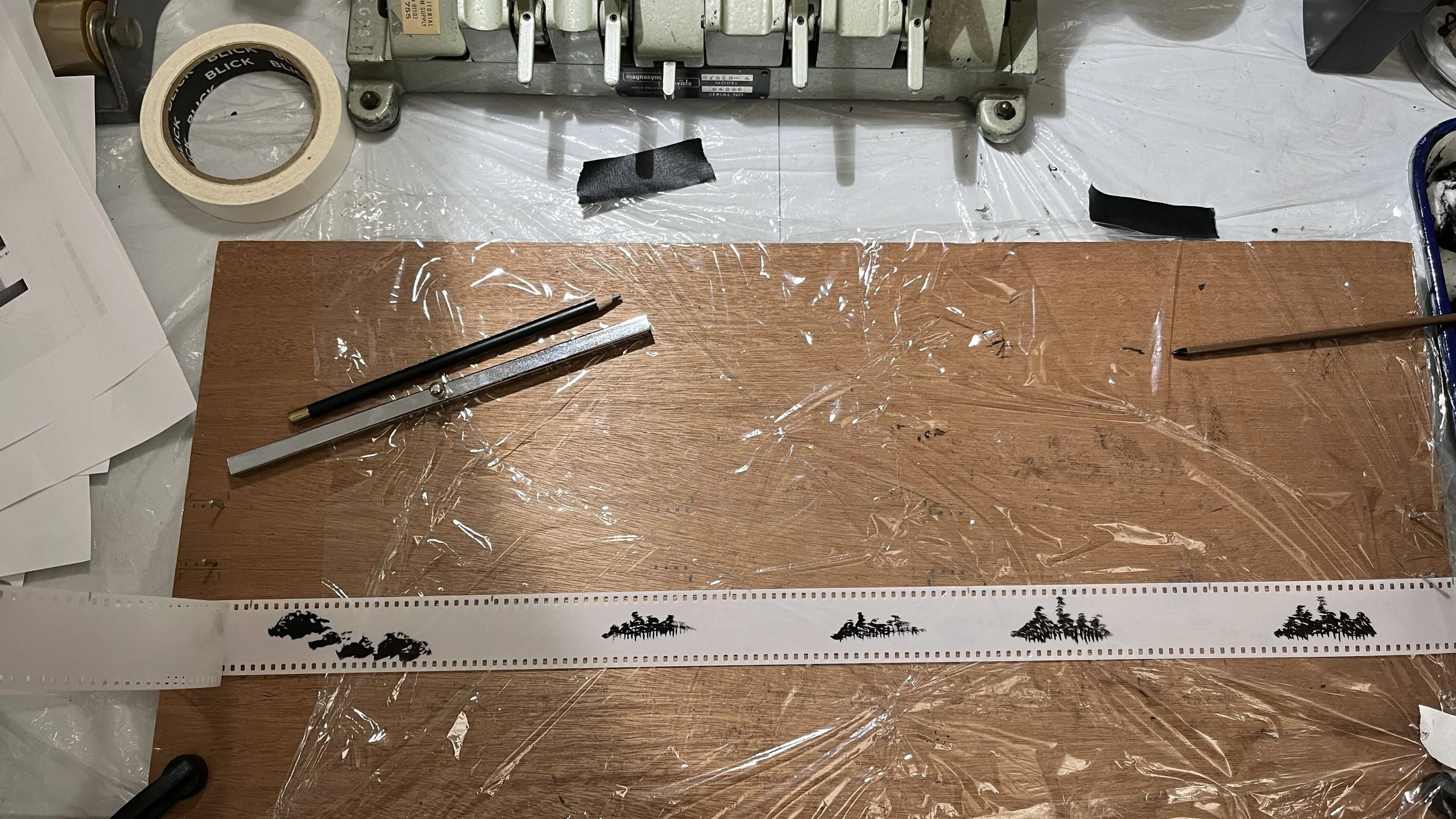
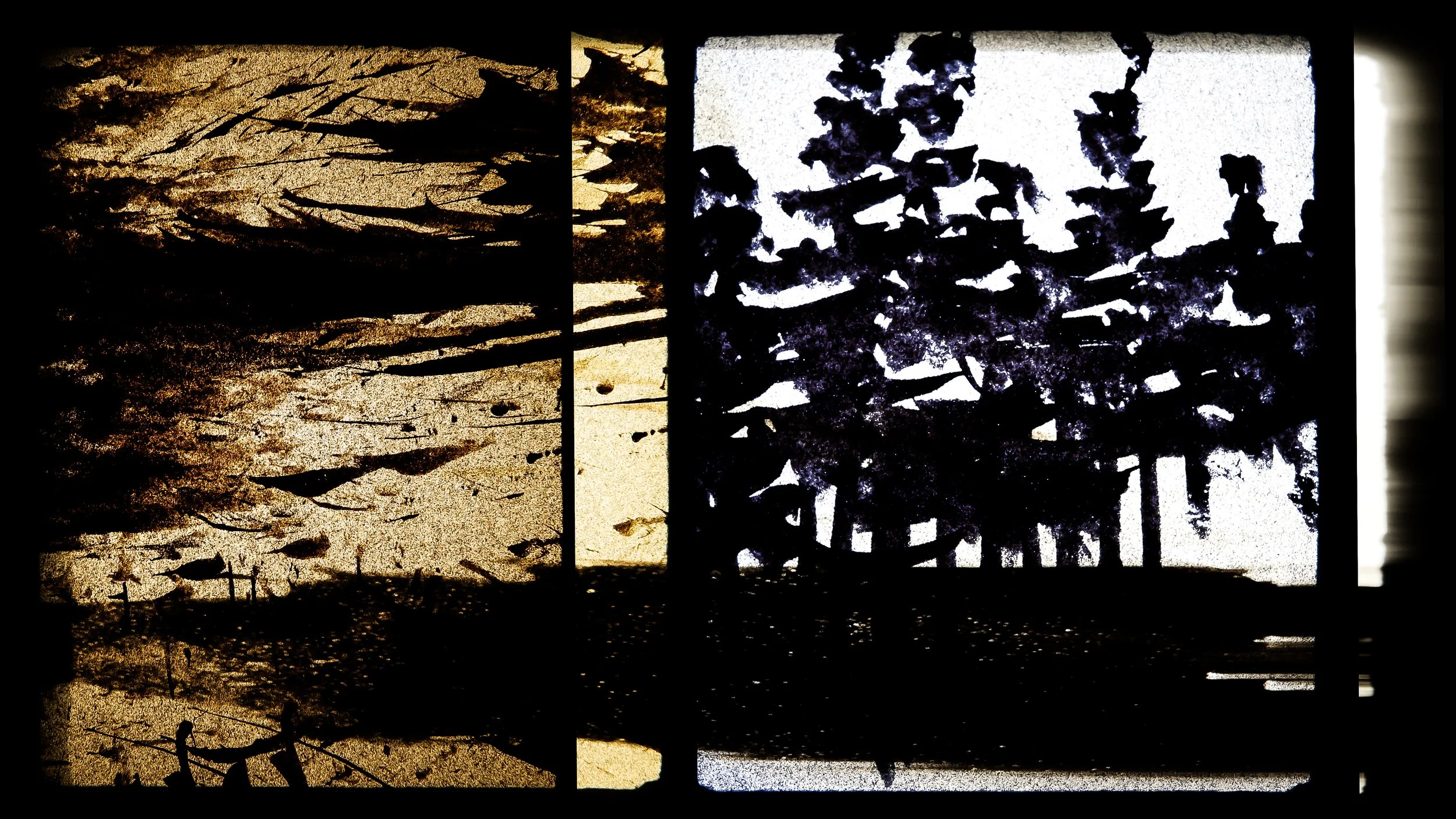
In the summer of 2025, unearthing an antique 1909 hand-cranked film projector inspired my first experiment in hand-painting on 35mm film. Though only 35 millimeters wide, it stretches for hundreds of feet, unfolding like a small-scale yet lengthy scroll painting. As an 800-watt light shines through the painted material and I turn the gears by hand, history unfolds before my eyes. Time does not flow backward; it has simply found a crack in which a boat may sail, and the wind may sing.
Music: Michael Pisaro-Liu
2025年夏天,偶然發現一台1909年的古董手搖電影放映機,激發了我第一次在35毫米底片上手繪的實驗。雖然只有35毫米寬,但它卻綿延數百英尺,如同一幅小巧卻綿長的捲軸畫展開。當800瓦的光束穿透繪畫膠片,當我手搖投影機的齒輪時,歷史在我眼前徐徐展開。時間不會倒流;它只是找到了一處縫隙,讓一艘小船得以航行,讓風得以哼唱。
音樂:邁克爾·皮薩羅-劉
Artist Statement:
Creating a soundtrack for Listen to the wind eight hundred times was very challenging. Of course, I had thought that recording wind sound 800 times might be an interesting experiment.
My initial concept came from imagining the movement and state changes of gases across environments and translating them into visible sound. Sound recording artist Michael Pisaro-Liu and I explored many places and times: indoors and outdoors, day and night, sunny and rainy days; from small things like water pipes to large things like mountain rocks; from nature to the human body to mechanical engines, etc. During this process, I thought of Chinese philosopher Zhuangzi's description of three categories of sound in the opening of his "On the Equality of Things (Qi Wu Lun)”: human sounds (the sounds produced by humans using bodily organs, such as singing or playing musical instruments), earthy sounds (the vibrations produced by the movement of air in the natural environment or by friction), and celestial sounds (a harmony achieved through various sounds from the world). Therefore, when making this film, I tried to experience and capture the colors of sound from as many perspectives as possible.
During editing, I overlapped, cut, and repeated various sound materials to blur different situations and environments, creating a flowing rhythm in an abstract space.
Finally, with the addition of Michael Pisaro-Liu's composition with guitar and electronics, the soundtrack for "Listen to the wind eight hundred times" was then considered complete.
製作《聽風八百遍》的音軌頗具挑戰性。當然,也曾想過將風聲錄八百遍,也許會是有趣的實驗。
我的最初概念來自於想像氣體在不同環境中的運動和狀態變化,並將它們轉化為可見的聲音。我和錄音師 Michael Pisaro-Liu 跑了許多地方進行探索:室內室外、白天夜晚、晴天雨天;小從水管,大到山巖壁石;從自然、到人體、到器械引擎,等。過程中我想到莊子在《齊物論》開篇提到聲音的三種類別:人籟(泛指人從身體器官發動氣體,如歌唱或吹奏樂器所產生的聲音)、地籟(指空氣流動時,與自然環境或物體摩擦所產生的振動)、及天籟(世間的各種聲音達到某種和諧)。因此在製作這部影片的時候,我讓自己盡可能從多方面去體驗、捕捉聲音的色彩。
剪輯時,將多種聲音材料重疊、切開、重複等,以模糊化各種情境和環境,創造出一種在抽象空間中、具有流動韻律的聲音符號。
最後加上 Michael Pisaro-Liu 編曲和吉他伴奏,才算完成了《聽風八百遍》的聲軌部分。

The title "Listen to the wind eight hundred times" is borrowed from an old Chinese anecdote.
Having heard the wind pass by countless times, one has finally come to realize the landscape of life, the Dao of life.
「聽風八百遍」這句諺語源自中國古代的一則軼詩。聽過無數次風的經過,才明瞭了人間的景色。



“Listen to the wind eight hundred times is a wonderfully executed blend of modern and vintage experimental filmmaking. The film is hypnotic, dream-like, and nostalgic, yet somehow original and contemporary. Using modern editing techniques with antiquated hardware makes for an excellent look into an experimental artist’s take on filmmaking. Listen to the wind eight hundred times also features a beautiful, haunting, and borderline post-rock score by Michael Pisaro-Liu that compliments the film beautifully. The film, like the Chinese anecdote, does have a certain ‘flowing’ tone, and once the film catches its stride, becomes something the viewer can easily be entranced by or lose themselves in.”
— New Jersey Stage, by Philip Thompson, New Jersey Film Festival. 08.29.2026
“An antique 1909 hand-cranked projector becomes the catalyst for a meditation on cinema, time, and impermanence. Hand-painted 35mm film unfurls like a painted scroll as light, pigment, and mechanical motion merge into a living performance of the medium itself. Accompanied by an evocative score from Michael Pisaro-Liu, this luminous work transforms the fragile materiality of film into a quiet meditation on history, memory, and the passage of time.”
— Chicago Underground Film Festival, 2026